


How Stem Cell Therapy Is Done, Step by Step
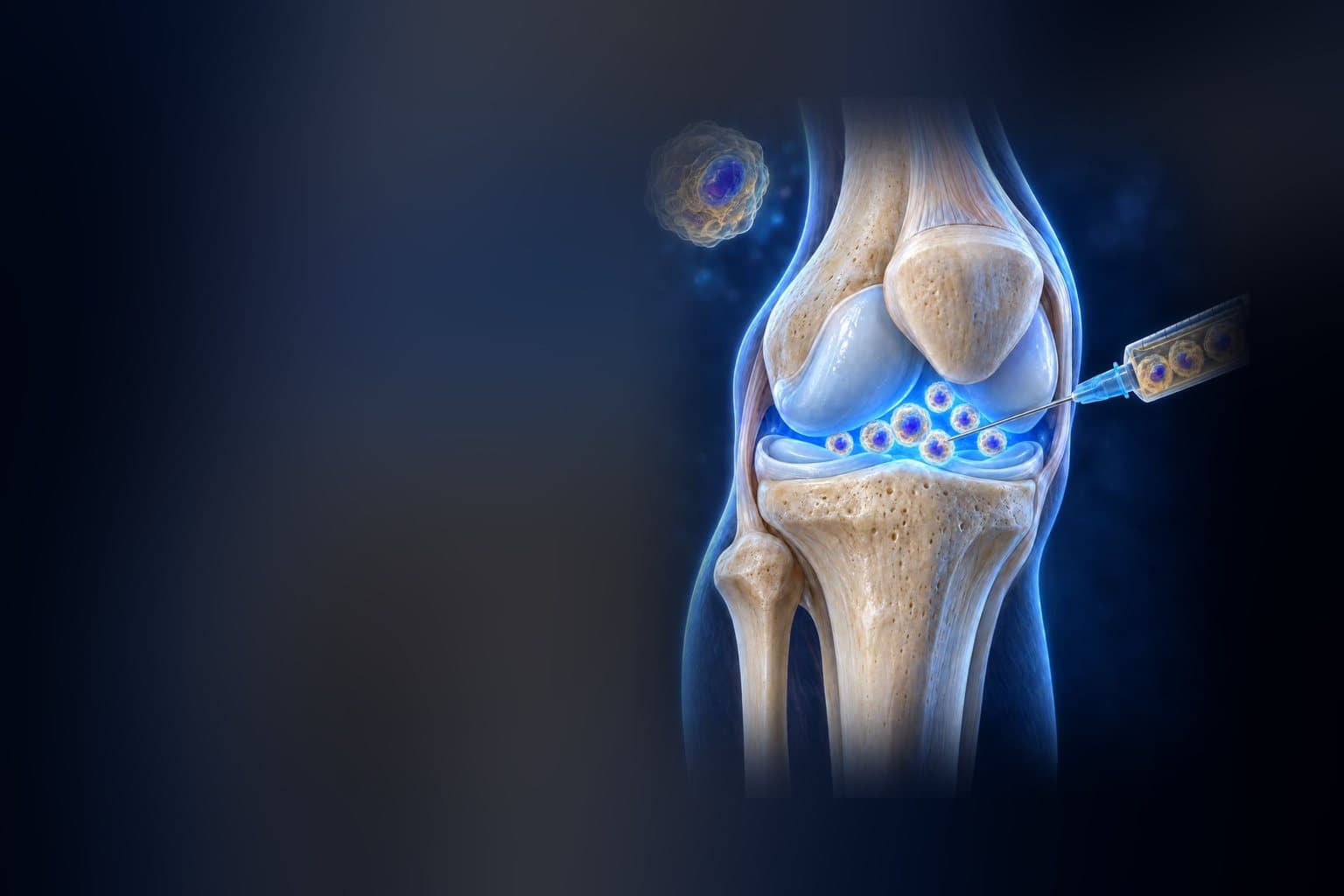
Stem Cell Therapy is an office injection: after an examination, cells are concentrated from your own bone marrow or prepared from donated cord tissue, then injected into the joint or tendon.
How Is Stem Cell Therapy Done?
Stem Cell Therapy for a joint or tendon is an office procedure: an injection, not a hospital transplant. It uses either cells concentrated from your own bone marrow, collected and prepared during the visit, or donated umbilical cord tissue, prepared in advance. Either way, it follows the same order: a consultation and examination, preparation of the cells, and an injection placed into the joint or tendon being treated.
Many people want to know before they book how the cells are collected, whether it hurts, and what the side effects are. Each step is set out below for both sources of cells, as the procedure is generally done.
At PRIME Orthopedics & Regenerative Center, Stem Cell Therapy is performed by Dr. Abbasi, who is double board certified in Orthopedic Surgery and Sports Medicine, after a full orthopedic examination.
An Injection, Not a Transplant
Search for how Stem Cell Therapy is done and many of the first answers describe a stem cell transplant. That is a different treatment. A stem cell transplant replaces a person's blood-forming system, usually after chemotherapy, and it is carried out in a hospital for diseases of the blood and bone marrow.
Stem Cell Therapy in orthopedics is an injection given in a doctor's office. The cells are placed into a joint or around a tendon, and you walk out of the office afterward.
Your Own Cells or Donated Cells
Stem Cell Therapy can use your own stem cells or a donor's, and the procedure differs mainly in how the cells are prepared.
- Autologous means the material comes from your own body. At this practice, bone marrow is collected and concentrated in the office during the same visit.
- Allogeneic means it comes from a donor. With donated umbilical cord tissue, nothing is collected from your body.
How Long the Visit Takes
At this practice, a visit that uses your own bone marrow takes about an hour and a half, because the marrow is collected and concentrated before the injection. A visit that uses donated cord tissue takes about thirty minutes.
Step 1: The Consultation and Examination
The first step in getting Stem Cell Therapy is a consultation with a doctor. You may contact the office directly, and no referral is needed unless your insurance plan requires one.
Bring any imaging you already have (the scans themselves, not only the report), a list of the medications you take, your insurance card and a photo ID. An MRI is not required before the appointment, and Dr. Abbasi will order additional imaging if it is needed.
At the visit, Dr. Abbasi takes a history of the problem, examines the joint and goes over your imaging with you. He explains the options, including Physical Therapy, or surgery when an injection is not the right step. If Stem Cell Therapy suits your case, he recommends whether your own cells or donated tissue should be used, and explains what the injection contains and where it comes from.
Step 2a: If Your Own Bone Marrow Is Used
When your own cells are used, a small sample of bone marrow is collected and concentrated before the injection. The result is called Bone Marrow Aspirate Concentrate, or BMAC, and What Is BMAC? explains it in more detail.
Where the Marrow Comes From
Bone marrow is the soft tissue inside the larger bones. For BMAC it is generally collected from the back of the hip bone, the rim of the pelvis known as the iliac crest, at a bony point you can feel at the lower back on either side, above the buttock. The patient generally lies face down for the collection.
How the Marrow Is Collected
The skin is cleaned, and a local anesthetic is injected to numb the skin, the tissue beneath it and the periosteum, the thin, sensitive membrane that covers the outside of the bone. At this practice, the collection is done under local anesthetic only, without sedation. A hollow needle is then passed through the hard outer layer of the bone into the marrow space inside. Liquid marrow is drawn into syringes that hold a small amount of anticoagulant, a substance that keeps the marrow from clotting while it is prepared. When the collection is finished, the needle is removed and a bandage is placed over the site.
Aspiration Is Not a Biopsy
Bone marrow aspiration is often confused with a bone marrow biopsy, the test used to diagnose diseases of the blood. A biopsy removes a small solid core of bone and marrow tissue for examination under a microscope. Aspiration for BMAC draws liquid marrow only, and the marrow is used for the injection rather than sent for testing.
How the Marrow Is Concentrated
The marrow is spun in a centrifuge, a machine that spins it at high speed in the office. Spinning separates the sample by weight: the heavier red blood cells sink to the bottom, the plasma rises to the top, and a thin layer rich in the marrow's other cells, including its stem cells, collects between them. That layer is drawn off into a syringe, and the concentrate is injected during the same visit. Preparing PRP from blood follows the same principle, which What Is PRP? describes.
Step 2b: If Donated Umbilical Cord Tissue Is Used
When donated cells are used, there is no collection step for you. The cells are prepared in advance and ready for your visit.
What Umbilical Cord Tissue Is
An umbilical cord contains cord blood, which carries blood-forming stem cells, and cord tissue, which includes Wharton's jelly, the soft, gel-like substance around the cord's blood vessels, and which carries mesenchymal stromal cells. The donated material used at this practice is umbilical cord tissue.
An umbilical cord stem cell injection is the same office injection, prepared from donated tissue rather than from your own marrow.
Step 3: How the Injection Is Placed
With either source, the injection itself follows the same steps. The skin over the joint or tendon is cleaned and numbed, and the cells are injected into the joint or tendon being treated. The treatment is performed by Dr. Abbasi, in the office.
Depending on the joint and the target, an injection can be placed by anatomical landmarks, which a doctor locates by feel, or guided by imaging. Ultrasound shows the joint or tendon, and the needle, on a screen as the injection is given, without radiation. Fluoroscopy, a live X-ray picture, is used for some deeper joints. Best Stem Cell Clinics in South Florida: How to Choose lists the questions worth asking about guidance and the rest of the procedure before you book.
Is Stem Cell Therapy Painful?
Patient guides describe what each step of the procedure usually feels like:
- The Numbing. The local anesthetic usually stings or burns for a few seconds as it goes in, and the area then goes numb.
- The Marrow Collection. Patient sheets for bone marrow aspiration describe a dull, deep ache, or a feeling of pressure and pulling, while the marrow is drawn. The numbing reaches the skin and the bone's outer membrane, but not the marrow inside.
- The Injection. An injection into a joint is usually felt as pressure or a sense of fullness as the fluid goes in.
At this practice, it is a band-aid procedure, and the injection itself is brief.
After a Stem Cell Injection
You walk out of the office afterward and drive home. The aftercare is the same as after a PRP injection: both are injections, and only what is injected differs. We recommend taking it easy that day. In our experience, most patients return to full activity the next day.
We recommend avoiding anti-inflammatory medicines such as ibuprofen and naproxen where possible, and ice as well, because both quiet the body's early response to an injection. Tylenol (acetaminophen) is fine for soreness, since it is not an anti-inflammatory. Before and After a PRP Injection explains the reasons in more detail.
Side Effects of a Stem Cell Injection
The common side effects of a stem cell injection are short-lived and local, at the places where a needle went in.
- Soreness at the Injection Site. Expect some soreness for a few days at the injection site; published patient guides list it as the most common effect.
- Soreness at the Collection Site. If your own cells were used, the back of the hip is usually sore for a few days as well, and mild bruising there is normal.
- Bleeding or Infection. Bleeding or infection at a needle site is uncommon, as it is with any injection.
Pain that keeps building, swelling that grows, or limping the next day is a reason to call the office, and so is a fever or redness that spreads.
The Procedure at a Glance
Every step of the procedure takes place in the office.
- Your Exam. Dr. Abbasi examines the joint, goes over your imaging with you and recommends a plan, including whether your own cells or donated tissue suits your case.
- Preparing the Cells. With your own cells, the area at the back of the hip bone is numbed with local anesthetic, a small sample of bone marrow is taken and it is concentrated in the office. With donated cord tissue, there is no collection step, and the cells are prepared in advance.
- The Injection. Dr. Abbasi injects the cells into the joint or tendon being treated.
- Heading Home. You walk out of the office and drive home. Expect some soreness for a few days at the injection site, and at the collection site if your own cells were used.
Why Choose an Orthopedic Surgeon for Stem Cell Therapy?

Stem Cell Therapy here begins with a full orthopedic evaluation, not a standalone injection.
Double Board Certified in Orthopedic Surgery and Sports Medicine
- Diagnosis First: A complete orthopedic diagnosis before any treatment is recommended.
- Imaging Reviewed: Your MRI and imaging reviewed by a double board certified orthopedic surgeon.
- Precise Placement: Precise, targeted placement in the joint or tendon being treated.
- Surgery If Needed: Surgical options from the same physician when a regenerative treatment isn't the right fit.
Questions People Ask
How is Stem Cell Therapy done?
It is done in three steps: an examination and review of your imaging, preparation of the cells, and an injection into the joint or tendon. The cells are either concentrated from your own bone marrow during the visit or prepared in advance from donated umbilical cord tissue.
Does Stem Cell Therapy use your own stem cells?
It can use either. Autologous treatment uses cells concentrated from your own bone marrow, collected during the same visit, and allogeneic treatment uses donated umbilical cord tissue, with nothing collected from you.
How does a stem cell injection work?
Once the cells are ready, the skin over the joint or tendon is cleaned and numbed, and the cells are injected into it. Depending on the joint and the target, the needle is placed by anatomical landmarks or guided by imaging such as ultrasound.
Is Stem Cell Therapy painful?
The numbing stings briefly, the marrow collection is usually felt as a deep ache or pressure, and the injection is felt as pressure. It is a band-aid procedure, and afterward you walk out of the office.
What are the side effects of a stem cell injection?
The common ones are soreness at the injection site for a few days, and soreness or mild bruising at the collection site if your own cells were used. Bleeding or infection at a needle site is uncommon.
How long does a stem cell injection take?
At this practice, a visit that uses your own bone marrow takes about an hour and a half, and a visit that uses donated cord tissue about thirty minutes.
What should I avoid after a stem cell injection?
The same as after PRP: we recommend avoiding anti-inflammatory medicines and ice where possible, and Tylenol (acetaminophen) is fine for soreness. We recommend taking it easy that day; in our experience, most patients return to full activity the next day.
Is a stem cell injection the same as a stem cell transplant?
No. A stem cell transplant replaces the blood-forming system and is carried out in a hospital, while an orthopedic stem cell injection is an office procedure into a joint or around a tendon.
Is bone marrow collection the same as a bone marrow biopsy?
No. A biopsy removes a small solid core of bone and marrow for testing, while the collection for BMAC draws liquid marrow only, which is concentrated and injected during the same visit.
Do I need a referral?
No. You may contact the office directly. If your insurance plan requires a referral, our staff will let you know.
Do I need an MRI before my appointment?
It is not required. Please bring any existing X-rays or MRI results, and Dr. Abbasi will order additional imaging if needed.
If you have more questions, please call the office.
Related
More Articles
- Stem Cell TherapyWhat Is BMAC? Bone Marrow Aspirate Concentrate ExplainedBMAC stands for Bone Marrow Aspirate Concentrate: your own bone marrow, drawn from the back of the hip bone, concentrated in a centrifuge and given back by injection in the same visit.October 22, 2026
- PRP TherapyBefore and After a PRP Injection: What to ExpectYou walk out of the office after a PRP injection and drive home; in our experience soreness eases within minutes and most patients return to full activity the next day.October 22, 2026
- PRP TherapyDoes Insurance or Medicare Cover PRP and Stem Cell Therapy?Medicare and the major insurers do not pay for PRP or stem cell injections into a joint or tendon; Medicare covers PRP only for certain chronic wounds.October 22, 2026