


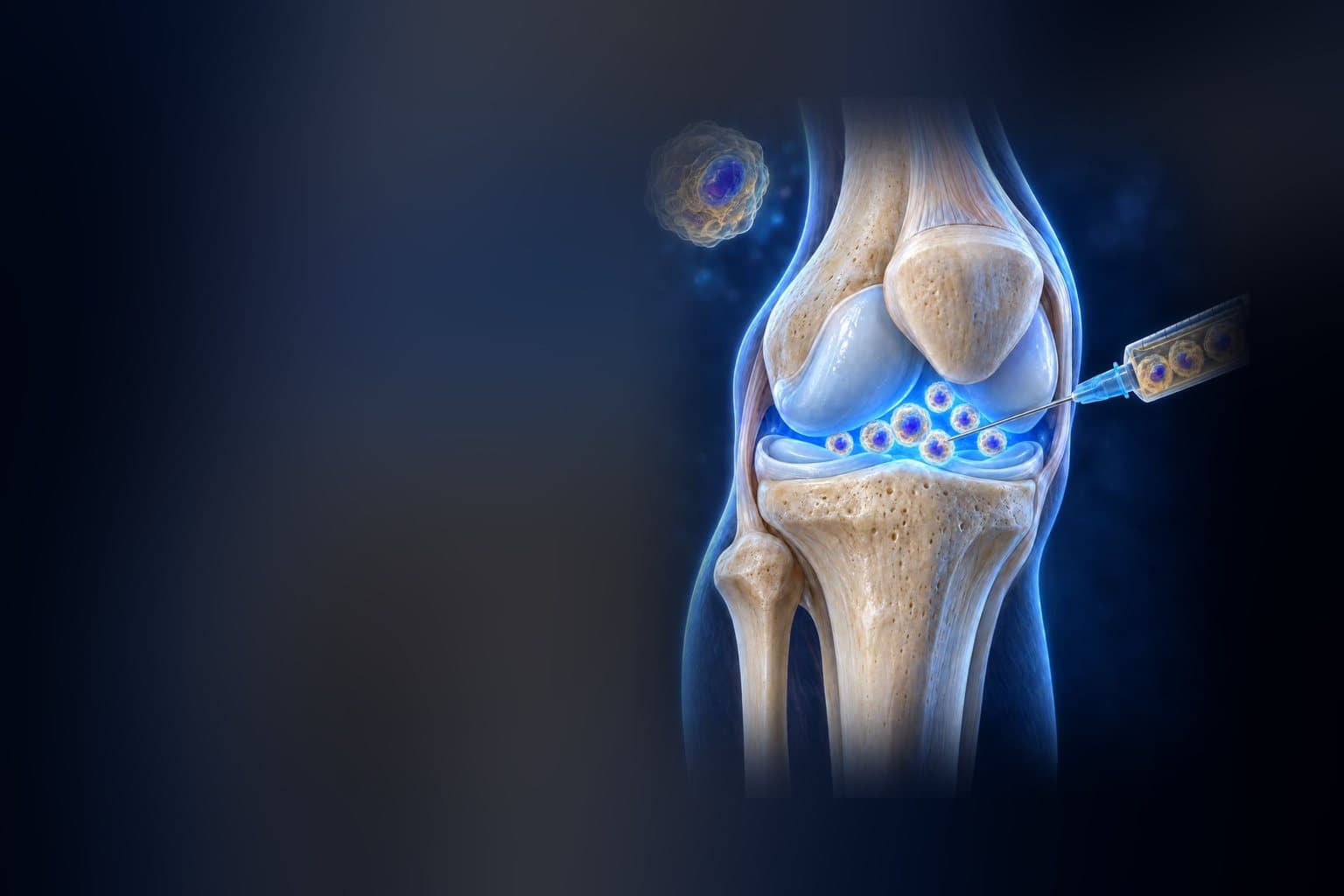
Best Stem Cell Clinics in South Florida: How to Choose
The best choice is a clinic whose answers you can check: who examines you, what is in the injection, who performs it, and how the doctor is certified.
How to Choose a Stem Cell Clinic in South Florida
Searching for the best stem cell clinic, or the best stem cell doctors in Florida, turns up many practices that describe the same treatment in similar words. The best choice for you is the one whose answers you can check: who examines you, what is in the injection and where it comes from, who performs it, and what that doctor's training is.
Those answers matter because a stem cell injection is only as sound a choice as the diagnosis behind it. A doctor who examines the joint and reviews the imaging can tell whether an injection suits the problem, or whether Physical Therapy or surgery is the right step instead.
At PRIME Orthopedics & Regenerative Center, Stem Cell Therapy is performed by Dr. Abbasi, who is double board certified in Orthopedic Surgery and Sports Medicine, after a full orthopedic examination.
What Stem Cells Are
Most cells in the body have one fixed job: a skin cell stays a skin cell, and a blood cell stays a blood cell. Stem cells are defined by two properties. They can divide to make more of themselves, and they can develop into other, more specialized types of cell. The International Society for Stem Cell Research (ISSCR), the field's main professional body, uses that two-part definition in its guide for patients.
There are two broad families. Embryonic stem cells come from early-stage embryos and can develop into nearly any cell type in the body. Adult stem cells, sometimes called tissue stem cells, are found in the bone marrow and other tissues throughout life. The cells used in Stem Cell Therapy at this practice are not embryonic: they come from bone marrow or from umbilical cord tissue.
What Is Mesenchymal Stem Cell Therapy?
The cells used in orthopedic injections are usually called mesenchymal stem cells, or MSCs. The name itself is debated.
In 2006 the International Society for Cellular Therapy (ISCT), now the International Society for Cell & Gene Therapy, set out minimal criteria that laboratories use to identify these cells. Under those criteria, the cells stick to plastic when grown in a dish, and they carry a particular set of marker proteins on their surface while lacking the markers found on blood cells. The society called them multipotent mesenchymal stromal cells, using "stromal", for the supporting tissue they are found in, rather than "stem".
In 2019 the same society recommended keeping the familiar abbreviation, MSC, but reserving the word "stem" for cells that have been shown to renew themselves, and naming the tissue the cells came from, as in umbilical cord MSCs or bone marrow MSCs. That is why both names are used for the same family of cells, and why the tissue source is worth asking about as well as the name.
Where the Cells Come From
Across the field, stem cell injections are prepared from several sources: some are taken from the patient's own body, and some are donated. Autologous means the material comes from your own body, and allogeneic means it comes from a donor. Stem Cell Therapy at PRIME Orthopedics & Regenerative Center uses either donated umbilical cord tissue or cells concentrated from your own bone marrow, and it is worth knowing which source any practice is recommending before you book.
Donated Umbilical Cord Tissue
An umbilical cord contains two different things that are often confused. Cord blood, the blood left in the cord and placenta after birth, carries blood-forming stem cells. Cord tissue is the cord itself, including Wharton's jelly, the soft, gel-like substance that surrounds the cord's blood vessels, and it carries mesenchymal stromal cells. The donated material used at this practice is umbilical cord tissue.
With donated cord tissue, nothing is collected from you.
Your Own Bone Marrow
Bone marrow is the soft tissue inside the larger bones. For Bone Marrow Aspirate, a small sample is collected from the back of the hip bone, near a bony point you can feel at the lower back. The area is numbed with local anesthetic, and a hollow needle draws liquid marrow into a syringe. The sample is spun in a centrifuge in the office to separate and concentrate its cells, and the concentrate, called Bone Marrow Aspirate Concentrate or BMAC, is injected during the same visit. What Is BMAC? explains the preparation in more detail, and the Bone Marrow Aspirate page describes it at this practice.
What a Stem Cell Doctor's Credentials Mean
Credentials are one of the few things about a stem cell doctor you can check before you book, and they are easy to misread.
There Is No Board Certification in Stem Cell Therapy
In the United States, physician board certification is granted by the 24 member boards of the American Board of Medical Specialties (ABMS). None of the 24 is a board for Stem Cell Therapy or Regenerative Medicine. A certificate that names either comes from a separate organization, so it is worth asking which board issued it. The credentials that tell you most are the doctor's specialty board certification and fellowship training.
Board Certification in Orthopedic Surgery
The American Board of Orthopaedic Surgery (ABOS) certifies orthopedic surgeons, and its process has several stages:
- Training. The surgeon completes medical school and then a five-year accredited orthopedic residency in the United States or Canada.
- The Written Examination. The surgeon passes Part I, a computer-based examination of about 320 questions covering the whole of Orthopedic Surgery.
- Practice and Peer Review. Before the oral examination, the surgeon must hold a full, unrestricted license and practice for 17 months in one location, and is reviewed by board certified surgeons and hospital leaders.
- The Oral Examination. The surgeon submits every operation performed over a six-month period. Twelve of those cases are selected, and the surgeon presents and defends them before examiners in Chicago.
- Renewal. A surgeon who passes becomes a Diplomate of the board for 10 years and then renews the certification.
Board Eligible Is Not Board Certified
After passing the written examination, a surgeon may describe themselves as Board Eligible for up to five years while preparing for the oral examination. Board Eligible means the training is complete and the written examination is passed. It does not mean the surgeon has passed the oral examination or the case review, and the ABOS lists only surgeons who have passed both parts as certified.
Fellowship Training and Double Board Certification
A fellowship is a further year of training after residency in one area of the field. For the ABOS Subspecialty Certificate in Orthopaedic Sports Medicine, the surgeon completes a one-year accredited fellowship in Sports Medicine, submits a year's case list of at least 115 operations (75 of them arthroscopic) and 10 non-operative cases, and passes a separate 175-question examination. A surgeon must hold the primary board certification to apply. A surgeon who holds both certificates is described as double board certified. Dr. Abbasi is board certified in Orthopedic Surgery and Sports Medicine.
How to Verify a Surgeon
Board certification can be checked in a few minutes on the ABOS's website, which shows whether a surgeon is currently certified and in which areas. Dr. Abbasi's certifications in Orthopedic Surgery and Sports Medicine can be confirmed there.
How an Injection Is Guided
An injection can be placed by feel, using landmarks on the body, or guided by imaging. Ultrasound shows the joint or tendon, and the needle, on a screen as the injection is given, without radiation. Fluoroscopy, a live X-ray picture, is used for some deeper joints. Which method suits an injection depends on the joint and the target, so it is reasonable to ask how yours will be guided and why.
Questions to Ask Before You Book
- Who examines me? The answer should be a doctor, at the first visit, who also goes over your X-rays or MRI with you before any treatment is recommended.
- What is in the injection? Ask exactly what the injection contains, and why that is the one recommended for you.
- Where do the cells come from? Ask whether the cells are your own or donated, and which tissue they come from. The ISSCR's patient guide lists an unclear source as a warning sign.
- Who performs the procedure? Ask who places the injection, what training that doctor has, and how the injection is guided to the right spot.
- Will I receive a written consent form? A written consent form explains the procedure, its risks and the alternatives, and you should have time to read it before you agree.
- What happens if I have a reaction? Ask who to call after the procedure, and how the office can be reached outside its usual hours.
- Will my primary care doctor be kept informed? Your own doctor should know about any treatment you receive, so ask whether the clinic will send a note or whether you should.
- What if an injection is not the right step? Ask whether the doctor will tell you when an injection is not the right step, and what the other options are, such as Physical Therapy or surgery.
- What will it cost? Ask for the cost before the visit. Regenerative injections are usually paid for directly, not through insurance.
Red Flags to Watch For
- No one examines you before a treatment is recommended.
- You are not told what the injection contains or where it comes from.
- You are pressed to pay for a package at the first visit, or to decide on the spot.
- You are told the treatment carries no risk.
- The same injection is offered for a long list of unrelated problems.
- Results are promised.
What a Visit Here Involves
A complete orthopedic diagnosis comes before any treatment is recommended.
- The Examination. Dr. Abbasi examines the joint, goes over your imaging with you and recommends a plan, including whether your own cells or donated tissue suits your case.
- Preparation. With your own cells, the area at the back of the hip bone is numbed with local anesthetic, a small sample of bone marrow is taken and it is concentrated in the office. With donated cord tissue, nothing is collected from you.
- The Injection. Dr. Abbasi injects the cells into the joint or tendon being treated, during the same office visit.
- Afterward. You walk out of the office and drive home. Expect some soreness for a few days at the injection site, and at the collection site if your own cells were used.
How Stem Cell Therapy Is Done, Step by Step walks through each stage of the procedure in more detail.
Why Choose an Orthopedic Surgeon for Stem Cell Therapy?
Stem Cell Therapy here begins with a full orthopedic evaluation, not a standalone injection.
Double Board Certified in Orthopedic Surgery and Sports Medicine
- Diagnosis First: A complete orthopedic diagnosis before any treatment is recommended.
- Imaging Reviewed: Your MRI and imaging reviewed by a double board certified orthopedic surgeon.
- Precise Placement: Precise, targeted placement in the joint or tendon being treated.
- Surgery If Needed: Surgical options from the same physician when a regenerative treatment isn't the right fit.
Questions People Ask
Which stem cell clinic is the best?
The useful comparison is the one you can check yourself: who examines you, what is in the injection and where it comes from, who performs it, and how the doctor is certified. A clinic that answers each of those plainly gives you what you need to decide.
What is a stem cell doctor called?
There is no single specialty called stem cell medicine, and none of the 24 ABMS member boards certifies doctors in it. Stem cell injections are offered by doctors from several specialties, among them orthopedic surgeons, who are trained to diagnose problems of the joints, tendons and ligaments and to treat them with and without surgery.
Are umbilical cord stem cells embryonic?
No. Embryonic stem cells come from early-stage embryos and can develop into nearly any cell type in the body, and they are not used at this practice. The cells used here are mesenchymal stem cells (MSCs), a type of stem cell found in bone marrow and umbilical cord tissue.
Does the umbilical cord have stem cells?
Yes. Cord blood carries blood-forming stem cells, and cord tissue, including the gel-like Wharton's jelly, carries mesenchymal stromal cells. The donated material used at this practice is umbilical cord tissue.
What is BMAC?
BMAC stands for Bone Marrow Aspirate Concentrate. It is made by collecting a small sample of your own bone marrow and spinning it in a centrifuge to concentrate its cells, and it is injected during the same visit.
Do I need a referral?
No. You may contact the office directly. If your insurance plan requires a referral, our staff will let you know.
Is Stem Cell Therapy covered by insurance?
Most PPO plans are accepted for consultations and surgical care. Regenerative injections are paid for directly. Please call the office to confirm what applies to your plan.
If you have more questions, please call the office.
Related
More Articles
- Stem Cell TherapyHow Stem Cell Therapy Is Done, Step by StepStem Cell Therapy is an office injection: after an examination, cells are concentrated from your own bone marrow or prepared from donated cord tissue, then injected into the joint or tendon.October 22, 2026
- Stem Cell TherapyWhat Is BMAC? Bone Marrow Aspirate Concentrate ExplainedBMAC stands for Bone Marrow Aspirate Concentrate: your own bone marrow, drawn from the back of the hip bone, concentrated in a centrifuge and given back by injection in the same visit.October 22, 2026
- PRP TherapyBefore and After a PRP Injection: What to ExpectYou walk out of the office after a PRP injection and drive home; in our experience soreness eases within minutes and most patients return to full activity the next day.October 22, 2026