


Common BJJ Injuries: Knee, Shoulder and Elbow
The knee is injured most often in Brazilian Jiu-Jitsu, above all the meniscus, the ACL and the MCL, followed by the shoulder, while in competition the elbow leads, usually from the armbar.
Common BJJ Injuries
Brazilian Jiu-Jitsu, or BJJ, asks more of the knee, the shoulder and the elbow than most sports do. Joint locks work by taking a joint to the end of its range, and takedowns, scrambles and guard play twist a leg that is carrying weight, so many people who train regularly come to know a sore knee or shoulder well.
Studies of people who train and compete describe a consistent pattern. The knee is the joint injured most often, the elbow leads in competition, and most injuries happen in training rather than at tournaments. Which structure is hurt, and how badly, decides whether time away from certain positions and Physical Therapy are enough or whether a repair is needed.
At PRIME Orthopedics & Regenerative Center, injuries from Jiu-Jitsu and other grappling sports are examined by Dr. Abbasi, who is double board certified in Orthopedic Surgery and Sports Medicine and serves as a ringside physician for major professional boxing and MMA events, including the UFC.
How Jiu-Jitsu Loads the Joints
Most sports injure the knee and the shoulder through running, jumping or throwing. Brazilian Jiu-Jitsu injures them differently. A joint lock is designed to take a joint to the end of its range and hold it there until the other person taps, and the person applying it controls how fast that happens. Takedowns and scrambles twist a knee while the foot is planted, and guard play bends and turns the knee under the weight of two people.
The pattern shows up clearly in the research. In a 2021 survey of more than 1,100 people who train, in 62 countries, the knee accounted for more than a quarter of the injuries that kept them off the mats for two weeks or longer, and the meniscus was the part of the knee injured most often, followed by the ACL and the MCL. A 2025 survey of 881 people found the knee and the shoulder the two joints injured most, and nearly nine in ten injuries happened in training rather than in competition.
The Knee
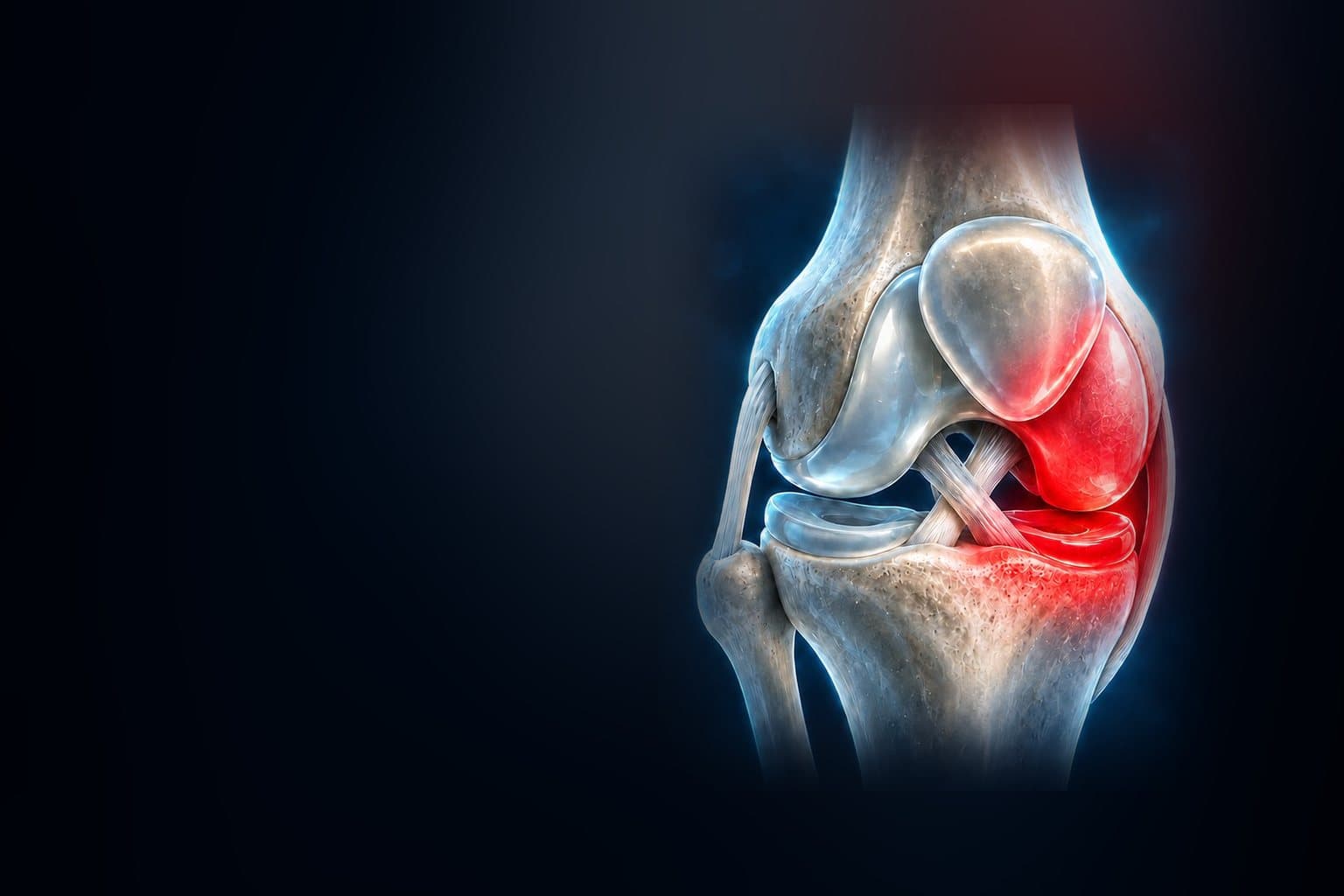
The knee is where the thigh bone, the femur, meets the shin bone, the tibia. Between them sit the two menisci, C-shaped pads of cartilage that spread the load across the joint, and four main ligaments hold the joint together: the anterior and posterior cruciate ligaments inside it, and the medial and lateral collateral ligaments along its inner and outer sides. Jiu-Jitsu loads all of these, often at once, because so many positions twist a bent knee.
Common Knee Injuries in BJJ
- A Meniscus Tear most often follows a twist on a bent knee that is carrying weight, as happens in takedowns, in scrambles and when a leg is caught in an opponent's guard. It tends to show itself as pain along the joint line, swelling over the following day, and at times catching or locking.
- MCL Sprain. The medial collateral ligament on the inner side of the knee is stretched or torn when the knee is pushed inward, as it can be when a leg is trapped and the body turns over it. The pain and tenderness sit along the inner side of the knee.
- ACL Tear. The anterior cruciate ligament inside the knee is torn by a sudden twist or a shift of the shin bone on the thigh bone, often with a pop and swelling within a few hours. A knee with a torn ACL may give way when it turns or pivots.
- Heel Hook Injury. The heel hook turns the heel, and the shin bone with it, putting a twisting load through the ligaments and the meniscus at the same time. In a 2026 study of brown and black belts competing in events of the International Brazilian Jiu-Jitsu Federation (IBJJF), knee injuries were much more frequent in matches where the heel hook was allowed.
The Shoulder
The shoulder moves through a wider range than any other joint in the body, and it relies on the rotator cuff tendons and the labrum, the rim of cartilage around the socket, to keep the ball centered. Shoulder locks such as the kimura and the americana work by levering the arm into rotation, and a posted arm can take the force of a fall during a takedown.
Common Shoulder Injuries in BJJ
- Rotator Cuff Tear. The rotator cuff is the group of four tendons that turn the arm and hold the ball of the shoulder in its socket. Forced rotation in a shoulder lock, or a late tap, can strain or tear them, and the injury tends to show itself as pain reaching overhead or behind the back, night pain, and weakness lifting or rotating the arm.
- Labral Tear. The labrum can tear when the arm is forced backward or when the shoulder takes a fall on an outstretched arm. A torn labrum can bring catching, clicking or grinding with movement, and a feeling that the shoulder is loose or slipping.
- AC Joint Separation. The AC joint sits at the top of the shoulder, where the collarbone meets the shoulder blade. Landing on the point of the shoulder in a takedown can sprain or separate it, which brings pain at the top of the shoulder and sometimes a visible bump.
The Elbow
In competition, the elbow is the joint injured most often. A study of tournaments in Hawaii found the elbow the most commonly injured joint and the armbar the most common cause. The armbar straightens the elbow past its normal range, and the strain falls on the structures along the inner side of the joint.
Common Elbow Injuries in BJJ
- Elbow Ligament Injury. The ulnar collateral ligament runs along the inner side of the elbow and stops it from bending outward. When an armbar takes the elbow past straight, this ligament and the tendons that start beside it take the strain, which can leave the inner elbow sore and the joint feeling unstable.
- Tendon Pain from Gripping. Gripping the gi or an opponent's wrist for round after round loads the forearm tendons that start at the outer and inner elbow, the same tendons involved in Tennis Elbow and Golfer's Elbow. The pain tends to come on when gripping or lifting.
The Hands and Fingers
Gi grips put the fingers under constant load, and a finger caught in a sleeve or a lapel can be bent sideways or backward. In a survey of people training in gyms in the United States, the hands and fingers were the part of the body injured most often. A finger that stays swollen, will not straighten or bend fully, or looks out of line is worth having examined, because some finger injuries can heal out of line if they are left untreated. The Hand and Wrist Pain page covers the hand and wrist in more detail.
Age, Rank and Training Load
The risk of injury in Brazilian Jiu-Jitsu rises with age, with rank and with competing. Many people keep training well into their forties and beyond, when tendons and cartilage are less forgiving than they were. A systematic review published in 2024 found the highest rates of injury among men over 30.
For most people who train, the real question after an injury is how long they will be off the mats. That depends entirely on what is injured: a mild sprain and a torn ligament can feel alike in the first few days and need very different care. That is why the examination comes before any plan.
When to Have a BJJ Injury Examined
- The knee swells, especially quickly or a lot.
- The knee locks, catches or gives way.
- You felt or heard a pop when the injury happened.
- You cannot put weight on the leg, or the joint looks out of shape.
- The shoulder aches at night, especially lying on that side.
- The arm is weak when you lift it or rotate it.
- The elbow feels loose or unstable after an armbar.
- The pain returns each time you go back to training.
If this sounds like you, let's find out why and get you taken care of. Book an Appointment.
What an Examination Involves
An orthopedic examination looks for the cause of the pain before any treatment is recommended.
- Your History. How the injury happened comes first: the position or submission, whether there was a pop, how quickly the joint swelled, and what has hurt since.
- The Examination. The examination checks how stable the ligaments are, how far the joint moves, how strong the muscles around it are, and whether specific tests for the meniscus, the rotator cuff or the elbow ligament reproduce the pain.
- X-Rays. X-rays show the bones, their alignment and any narrowing of the joint from Arthritis.
- An MRI When Needed. An MRI is ordered when symptoms persist or when a tear of the meniscus, a ligament, a tendon or the labrum is suspected.
Treatment for BJJ Injuries
Many knee, shoulder and elbow injuries from Jiu-Jitsu are treated without surgery, and the plan depends on what is injured and how badly.
Without Surgery
- Time away from the positions and submissions that load the injured joint gives it room to settle, while you keep training what the injury allows.
- Physical Therapy restores range, strength and control around the joint, with exercises to continue at home.
- A hinged knee brace supports some ligament sprains of the knee, such as an MCL Sprain.
- Anti-inflammatory medicines can be used for a short period.
When Surgery Is Recommended
- Surgery is recommended when an injury is not expected to settle with conservative treatment, such as a displaced Meniscus Tear that locks the knee, or a complete ACL Tear in a knee that keeps giving way.
For people who train and are weighing Regenerative Medicine, Stem Cell Therapy and PRP for Athletes sets out what each treatment is, what the visit involves and the rules for tested athletes.
Your Knee Deserves a Specialist, Not a Guess

Knee Pain wears you down when nobody can tell you why. Dr. Abbasi gets to the bottom of it and stays with you for every step that follows.
Double Board Certified in Orthopedic Surgery and Sports Medicine
- You'll Know Why: A full exam and a review of your imaging.
- You'll Know Your Options: From Regenerative Medicine to surgery when it's needed.
- You'll Have One Doctor: Dr. Abbasi, at every visit, start to finish.
Questions People Ask
What are the most common injuries in BJJ?
The knee is injured most often, above all the meniscus, the ACL and the MCL, followed by the shoulder. In competition the elbow leads, usually from the armbar, and in everyday gym training the hands and fingers take a great deal of strain from gi grips.
Is BJJ bad for your knees?
The knee is the joint injured most often in Brazilian Jiu-Jitsu, and twisting positions such as the heel hook load it heavily. Studies have not yet measured whether years of training lead to Knee Arthritis, so there is no clear answer either way.
How long does a heel hook injury take to heal?
It depends on what was injured. A mild ligament sprain and a torn ligament or meniscus are very different injuries, and the examination and imaging decide which it is before any timeline can be given.
Can I keep training with a sore knee?
Training around an injury, away from the positions that hurt it, is often possible. A knee that swells, locks or gives way should be examined before you roll again.
When can I go back to BJJ after knee surgery?
The timing depends on the operation and on how the knee recovers, and the surgeon sets it together with the Physical Therapy program. A return to training is usually gradual, beginning with drilling before live rolling.
Do I need a referral?
No. You may contact the office directly. If your insurance plan requires a referral, our staff will let you know.
Will I need surgery?
Not necessarily. Many knee, shoulder and elbow injuries are treated without surgery. Surgery is recommended when conservative treatment is not expected to be sufficient.
If you have more questions, please call the office.
Related
More Articles
- Stem Cell TherapyStem Cell Therapy and PRP for Athletes: A Grappler's GuidePRP, Bone Marrow Aspirate, Stem Cell Therapy and Exosome Therapy are injections that differ in what is used and where it comes from, and tested athletes should check their federation's anti-doping rules before treatment.November 3, 2026
- Stem Cell TherapyHow Stem Cell Therapy Is Done, Step by StepStem Cell Therapy is an office injection: after an examination, cells are concentrated from your own bone marrow or prepared from donated cord tissue, then injected into the joint or tendon.October 22, 2026
- Stem Cell TherapyWhat Is BMAC? Bone Marrow Aspirate Concentrate ExplainedBMAC stands for Bone Marrow Aspirate Concentrate: your own bone marrow, drawn from the back of the hip bone, concentrated in a centrifuge and given back by injection in the same visit.October 22, 2026