


How to Avoid Knee Surgery: Options to Try First
Many knee problems, including Knee Arthritis, are treated first with exercise, weight loss where it applies, medication, a brace or a cane, while a few injuries usually need an operation.
How to Avoid Knee Surgery
Many people who are told they may need knee surgery want to know what can be tried first. Knee Arthritis and most overuse problems are treated without surgery first, with exercise and Physical Therapy, weight loss where it applies, changes to activity, medication, a brace or a cane. A few injuries, such as a completely torn tendon or a torn piece of meniscus that locks the knee, usually need an operation, and for those, waiting can make the repair harder.
Which of the two applies depends on what is wrong inside the knee. That is why the examination and imaging come before any plan, and why the first aim is to tell a knee that is likely to settle with conservative care from one that needs surgery.
At PRIME Orthopedics & Regenerative Center, the knee is examined by Dr. Abbasi, who is double board certified in Orthopedic Surgery and Sports Medicine, before any treatment is recommended.
More About Non-Surgical Options
How the Knee Is Built
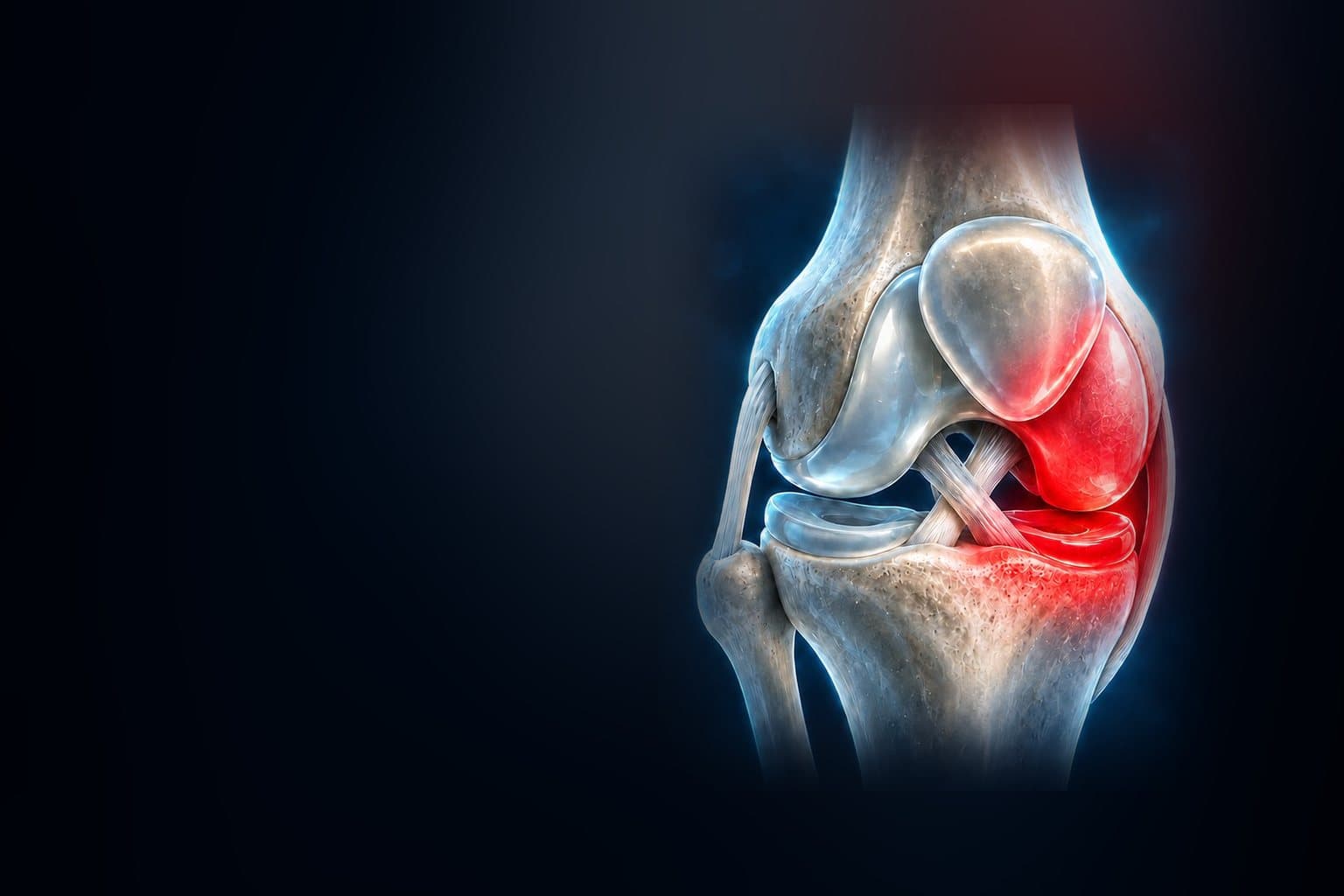
The knee is where the thigh bone, the femur, meets the shin bone, the tibia. The kneecap, or patella, glides in a groove at the front of the thigh bone as the knee bends. The ends of all three bones are covered in smooth articular cartilage, which lets them move against each other with very little friction.
Between the thigh bone and the shin bone sit the two menisci, C-shaped pads of tougher cartilage, one on the inner side of the knee and one on the outer side. They spread the load across the joint and help steady it. Only the outer third of each meniscus has a good blood supply. A tear in that outer zone can heal or be stitched; the inner two-thirds has little blood supply, and a tear there generally cannot heal on its own.
Four main ligaments hold the knee together. The anterior and posterior cruciate ligaments, the ACL and PCL, cross inside the joint and stop the shin bone from sliding forward or backward. The medial and lateral collateral ligaments, the MCL and LCL, run along the inner and outer sides and stop the knee from bending sideways. The quadriceps muscles at the front of the thigh straighten the knee through the quadriceps and patellar tendons, and the hamstrings at the back bend it.
Which of these parts is injured, and how badly, decides whether a knee is likely to settle with conservative care or needs an operation.
What the Guidelines Say About Avoiding Knee Surgery
Three major guidelines set out the treatment of Knee Arthritis without surgery: the American Academy of Orthopaedic Surgeons (AAOS) guideline of 2021, the American College of Rheumatology (ACR) and Arthritis Foundation guideline of 2019, and the Osteoarthritis Research Society International (OARSI) guideline of 2019. Each grades its recommendations by the strength of the evidence behind them. They agree on the core: education about the condition, structured exercise, weight management, and anti-inflammatory medicines, with a brace, a cane and an injection as further steps where they suit.
The Options, One by One
Exercise and Physical Therapy
Exercise is the one treatment that every major guideline places at the center of care for Knee Arthritis. The AAOS strongly recommends supervised, unsupervised or water-based exercise, and the ACR strongly recommends exercise and notes that it does more when it is supervised, often by a physical therapist.
A Physical Therapy program builds strength in the quadriceps, the hamstrings and the muscles around the hip, which help absorb the load of each step. It also works on balance and on how the knee moves through walking, stairs and rising from a chair. A course usually runs over several weeks, with exercises to continue at home between sessions.
Programs that teach people how to manage their own condition, from pacing activity to handling a flare, are strongly recommended by both the AAOS and the ACR as well.
Losing Weight
Body weight is carried through the knee with every step, and the knee carries a multiple of it. In a study of adults with Knee Arthritis, published by Messier and colleagues in 2005, each pound of weight lost took about four pounds of load off the knee with every step while walking. Over the thousands of steps in a day, that adds up.
The ACR strongly recommends weight loss for people with Knee Arthritis who are overweight, and the AAOS recommends sustained weight loss as well. The ACR's guideline links a loss of 5 percent of body weight or more with changes in symptoms, with more change as more weight is lost, and notes that weight loss does more when it is combined with exercise.
Low-Impact Activity
Changing how you load the knee gives an irritated joint room to settle without giving up activity. Cycling, swimming and exercise in water keep the joint moving and the muscles working with much less load on the knee than running or jumping. The ACR also strongly recommends tai chi for Knee Arthritis. Cutting back for a time on deep squats, kneeling and long stretches of stairs eases the load on the joint behind the kneecap.
Medication
- Anti-Inflammatory Gels. Anti-inflammatory medicines applied to the skin over the knee are strongly recommended by both the AAOS and the ACR, and the knee suits them because the joint lies close to the surface.
- Anti-Inflammatory Tablets. Tablets such as ibuprofen and naproxen are strongly recommended by both guidelines as well. They are taken at the lowest dose that helps, for the shortest time, because they can affect the stomach, the heart and the kidneys.
- Acetaminophen. The AAOS strongly recommends acetaminophen; the ACR describes its effect as small and suggests it for short-term or occasional use, especially when anti-inflammatory medicines do not suit.
A Cane
A cane held in the hand opposite the sore knee takes part of the load off the knee with each step. The ACR strongly recommends a cane for Knee Arthritis where it is needed, and the AAOS says one could be used.
An Unloader Brace
Knee Arthritis often wears one side of the joint more than the other, usually the inner side. An unloader brace is a rigid brace that shifts the load toward the less worn side. The ACR strongly recommends this kind of brace for Arthritis between the thigh bone and the shin bone, for people who can tolerate the inconvenience of wearing it, and the AAOS says a brace could be used.
Injections
A steroid injection, where it is the right tool, or a regenerative injection, where it is the right step, may be part of the plan.
The AAOS and the ACR both support a steroid injection into the knee for short-term relief of Arthritis pain.
What the Guidelines Say Does Not Help
Some popular options do not have the guidelines' support.
- Wedge Insoles. Shoe insoles that are thicker on the outer edge, sold to shift load off the inner side of the knee, are strongly recommended against by the AAOS.
- Glucosamine and Chondroitin. The OARSI guideline strongly recommends against these supplements for Knee Arthritis, and the AAOS found the evidence on supplements inconsistent.
A Meniscus Tear Without Surgery
A Meniscus Tear is not always a reason for an operation. Tears come about in two ways: a twisting injury in a younger, active knee, or a gradual fraying of the meniscus in middle age and later, often alongside early Knee Arthritis.
The AAOS describes nonsurgical care for a tear whose symptoms do not persist and that does not cause the knee to lock or swell. That care includes rest, ice, compression and elevation, anti-inflammatory medicine, and exercises to strengthen the muscles around the knee. For a worn tear in a knee with mild to moderate Arthritis, the AAOS guideline places surgery after Physical Therapy or other nonsurgical care has been tried.
A tear that locks the knee is different, and is covered below.
Injuries That Usually Need an Operation
A few knee injuries are unlikely to heal well without surgery.
- A Displaced Meniscus Tear. A torn piece of meniscus that has flipped into the middle of the joint, often called a bucket-handle tear, can block the knee, so that it locks and will not fully straighten.
- An ACL Tear in an Unstable Knee. The ACL has a poor blood supply and is bathed in joint fluid, and a complete tear usually does not heal back together on its own. Some knees stay stable without it, particularly in people whose work and sport involve little turning or pivoting; others give way on turning, pivoting and cutting. Activity level, not age, is the main factor in the decision, and a knee that keeps giving way can go on to injure the meniscus.
- A Torn Quadriceps or Patellar Tendon. Without the tendon, the thigh muscles cannot straighten the knee, and a person cannot lift the leg straight off the bed. Complete tears of the patellar tendon are almost always treated with surgery, as are most complete tears of the quadriceps tendon.
- A Fracture Into the Joint Surface. A break that runs into the cartilage surface of the shin bone can heal out of line and leave the joint uneven. Such fractures often need to be held with a plate and screws, with any sunken pieces lifted back into place.
For some of these, timing matters. A completely torn tendon can scar and shorten within about a month, which is why a complete tendon tear is usually repaired soon after the injury.
How Long Conservative Care Is Tried Before Surgery
No guideline sets a single number, because the answer depends on the condition. A few general figures give a sense of it.
- An Isolated ACL Tear. AAOS guidance describes about twelve weeks of non-operative treatment for an ACL tear without other injuries, and, when reconstruction is chosen, doing it within about five months of the injury.
- A Worn Meniscus. Supervised exercise programs for a gradually frayed meniscus have typically run for about twelve weeks.
- A Partial Tendon Tear. A small partial tear of the quadriceps or patellar tendon is generally treated with a brace or knee immobilizer for three to six weeks, followed by Physical Therapy.
- Knee Arthritis and Knee Replacement. Many insurers' medical policies, such as those of BlueCross BlueShield of South Carolina and Highmark, ask for about three months of documented nonsurgical care, often at least two of Physical Therapy, medication and injections, before they approve a Knee Replacement. Rules vary from plan to plan.
For Knee Arthritis, the decision about a replacement rests on how much pain and loss of function remain after conservative care has been tried, together with the examination and the X-rays.
When Surgery Is Recommended
- An injury such as a displaced meniscus tear is not expected to settle with conservative treatment.
- The knee keeps giving way after a ligament injury.
- Conservative treatment has been tried, and the knee still limits daily life.
If this sounds like you, let's find out why and get you taken care of. Request a Call Back.
What the Examination Involves
An orthopedic examination looks for the cause of the pain before any treatment is recommended.
- Your History. How and when the pain started, what brings it on, what eases it, and what has already been tried are the first questions.
- The Examination. The examination checks how the kneecap moves, how stable the ligaments are, how far the knee bends and straightens, and how strong the surrounding muscles are.
- X-Rays. X-rays show the alignment of the knee and any narrowing of the joint.
- An MRI When Needed. An MRI is ordered when a tear of the meniscus, a ligament or the cartilage surface is suspected.
Your Knee Deserves a Specialist, Not a Guess

Knee Pain wears you down when nobody can tell you why. Dr. Abbasi gets to the bottom of it and stays with you for every step that follows.
Double Board Certified in Orthopedic Surgery and Sports Medicine
- You'll Know Why: A full exam and a review of your imaging.
- You'll Know Your Options: From Regenerative Medicine to surgery when it's needed.
- You'll Have One Doctor: Dr. Abbasi, at every visit, start to finish.
Questions People Ask
How can I avoid Knee Replacement surgery?
The options the major guidelines support most strongly for Knee Arthritis are exercise, weight loss for people who are overweight, and anti-inflammatory medicines, with a cane, an unloader brace and an injection as further steps. A Knee Replacement is generally considered when pain and loss of function remain after these have been tried.
Can you avoid surgery with a bone-on-bone knee?
“Bone-on-bone” describes an X-ray on which the cartilage space in the joint has worn away. The guidelines' conservative options are written for Knee Arthritis in general, and the decision about a replacement weighs how much pain and loss of function remain after them, not the X-ray alone.
Can I avoid knee surgery by losing weight?
In a study of adults with Knee Arthritis, each pound lost took about four pounds of load off the knee with every step, and the guidelines recommend weight loss for people with Knee Arthritis who are overweight. Weight loss does not change an injury such as a torn tendon or an unstable ligament, which is why the cause is found first.
Can a Meniscus Tear be treated without surgery?
Many tears can be. A tear whose symptoms settle and that does not lock or swell the knee is often treated with rest, anti-inflammatory medicine and strengthening exercises, while a torn piece that locks the knee usually needs an operation.
Does a torn ACL heal on its own?
A complete ACL tear usually does not heal back together on its own, because the ligament has a poor blood supply and is bathed in joint fluid. Some people keep a stable knee without it, and activity level is the main factor in whether reconstruction is advised.
How long should I try Physical Therapy before knee surgery?
It depends on the condition, and no single number applies. Programs for a worn meniscus and for an isolated ACL tear have typically run for about twelve weeks, and many insurers ask for about three months of documented nonsurgical care before approving a Knee Replacement.
What is the best non-surgical treatment for knee pain?
It depends on the cause, which is why the examination comes first. Physical Therapy is part of the plan for many people, along with changes to activity, bracing or medication.
Will I need surgery?
Not necessarily. Many knee injuries are treated without surgery. Surgery is recommended when conservative treatment is not expected to be sufficient.
Can I get a second opinion?
Yes. Bring your imaging and any notes from other doctors, and they are reviewed with you at the visit.
Do I need a referral?
No. You may contact the office directly. If your insurance plan requires a referral, our staff will let you know.
If you have more questions, please call the office.
Related
More Articles
- Stem Cell TherapyHow Stem Cell Therapy Is Done, Step by StepStem Cell Therapy is an office injection: after an examination, cells are concentrated from your own bone marrow or prepared from donated cord tissue, then injected into the joint or tendon.October 22, 2026
- Stem Cell TherapyWhat Is BMAC? Bone Marrow Aspirate Concentrate ExplainedBMAC stands for Bone Marrow Aspirate Concentrate: your own bone marrow, drawn from the back of the hip bone, concentrated in a centrifuge and given back by injection in the same visit.October 22, 2026
- PRP TherapyBefore and After a PRP Injection: What to ExpectYou walk out of the office after a PRP injection and drive home; in our experience soreness eases within minutes and most patients return to full activity the next day.October 22, 2026